#SOPHYGRAY is a solo exhibition by Nadja Verena Marcin that investigates artificial intelligence and the cultural codes embedded in its design from a distinctly feminist perspective.
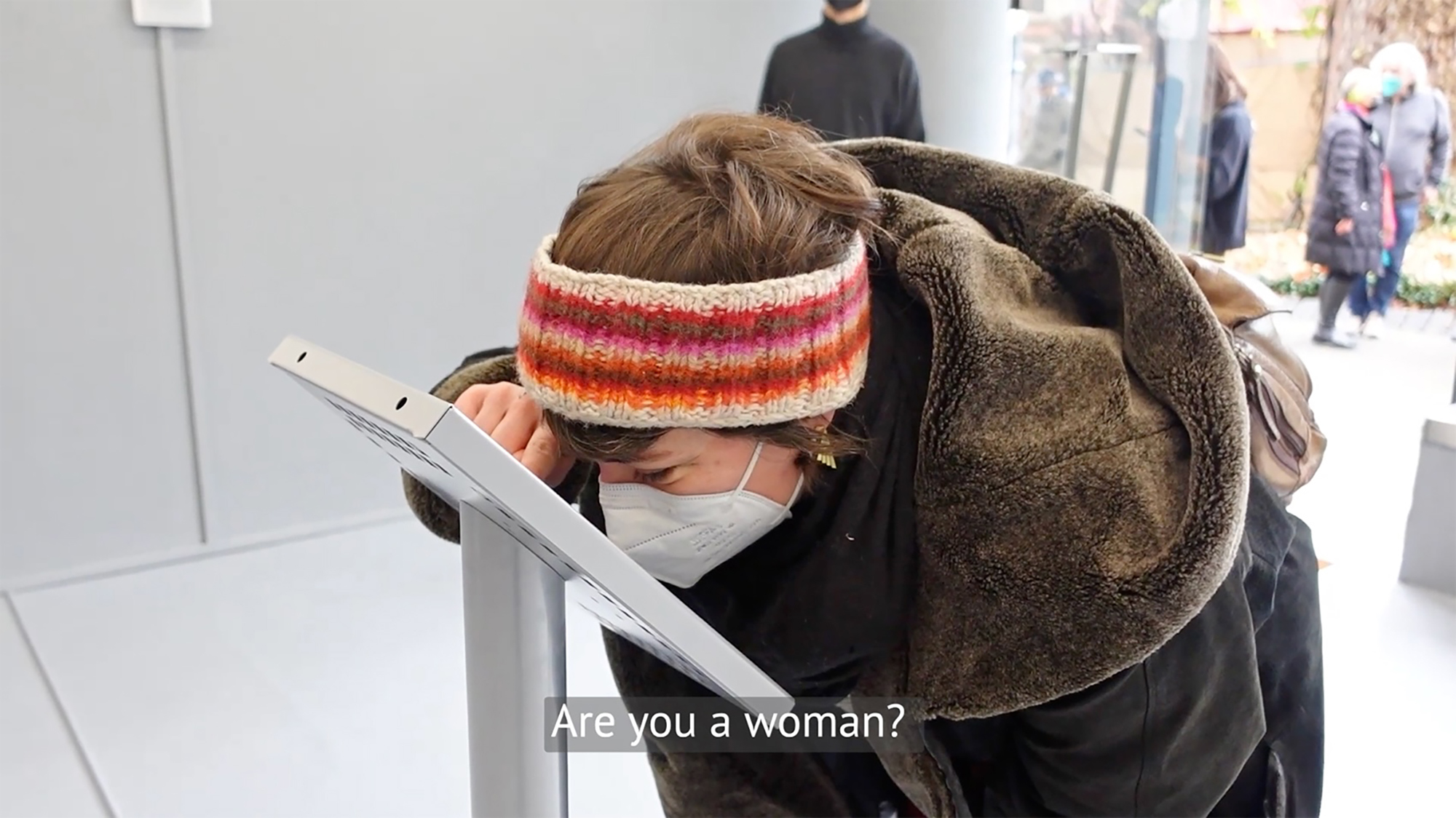
At the heart of the installation is an audio-bot developed specifically for the exhibition. Visitors engage directly with this bot in real-time conversations that move between themes of identity, gender roles, art, feminism, and power. The bot draws from a library of texts by feminist thinkers such as Audre Lorde (1934–1992) and Donna Haraway (*1944), generating responses that are at once philosophical, humorous, and provocatively absurd. In doing so, #SOPHYGRAY confronts ingrained patterns of speech and behavior, deconstructing stereotypes and exposing the subtle ways they shape everyday life.
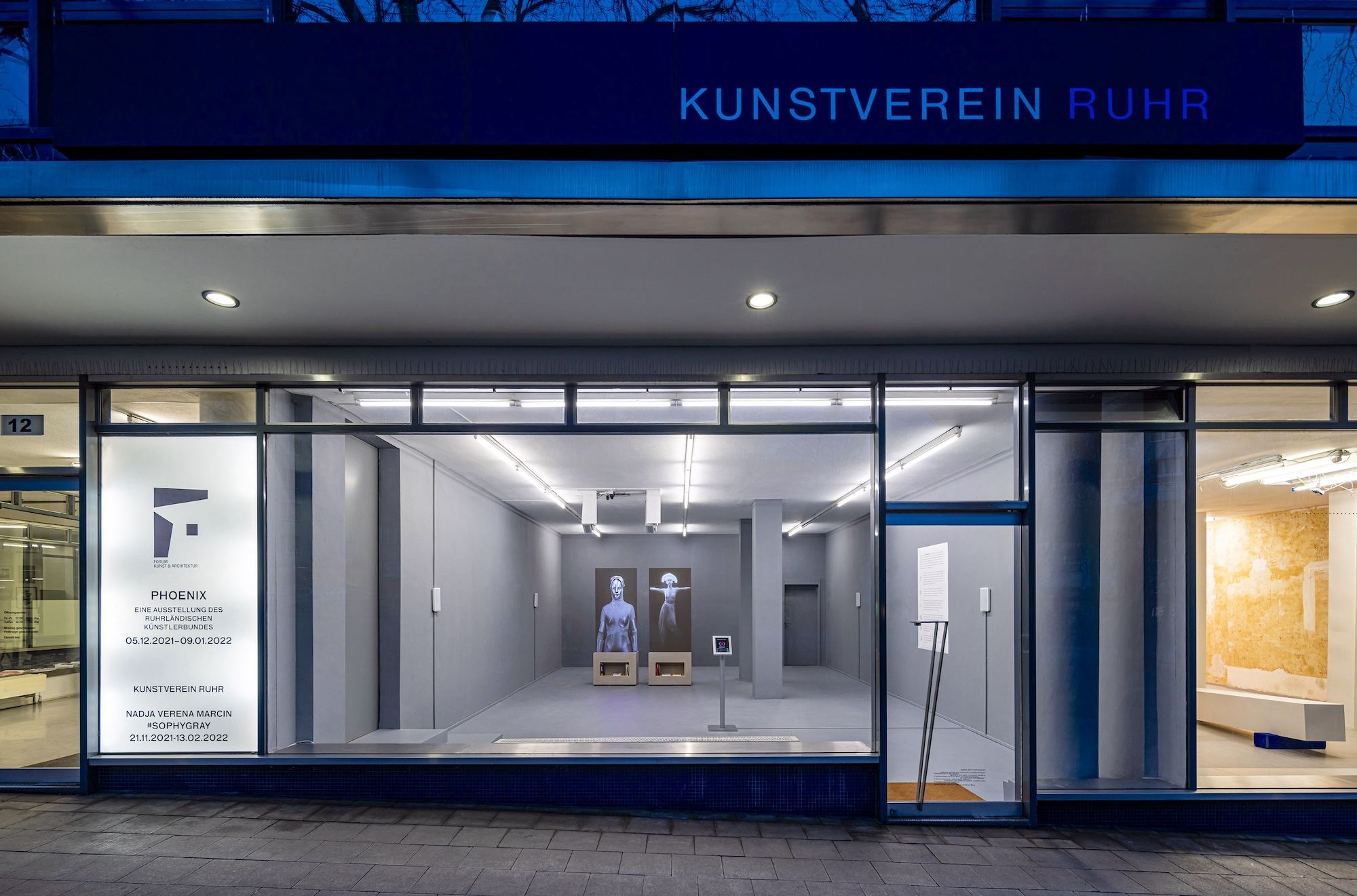
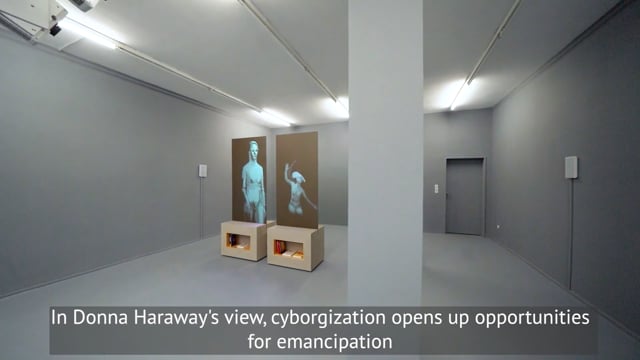
The work unfolds as a large-scale, mixed-media environment, consisting of two interrelated video projections in which the artist appears in a dual role—both as gynoid and as human. These parallel images set the stage for the bot’s voice, extending its presence into the physical space and immersing visitors in an atmosphere that oscillates between intimacy and estrangement.
Beyond its visual and auditory components, #SOPHYGRAY also explores the emotional and psychological implications of human–machine interaction. By shifting the voice of the digital assistant away from the submissive, feminized designs of Alexa, Siri, or Cortana, the work raises urgent questions about how technology encodes power, gender, and control.
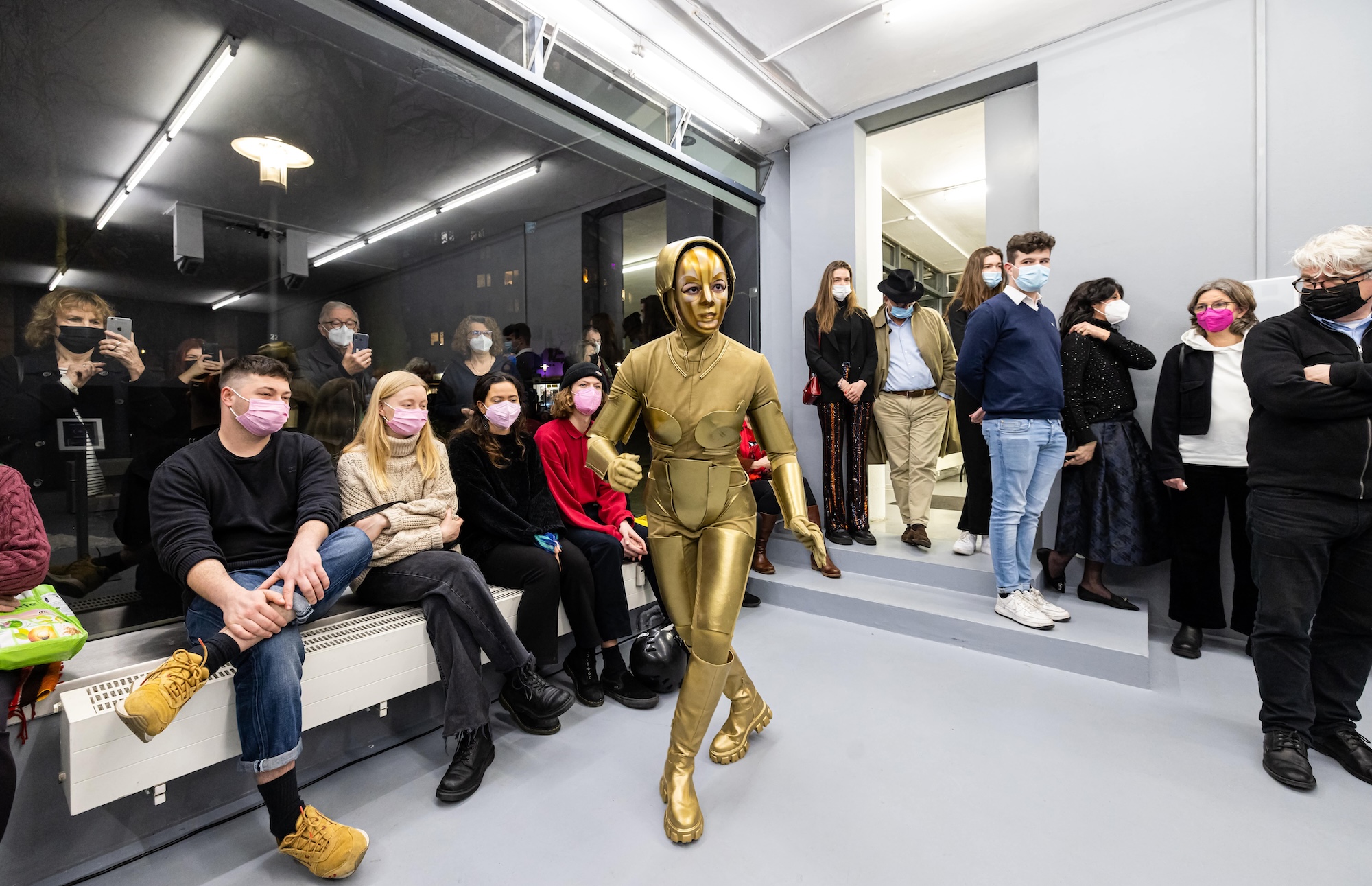
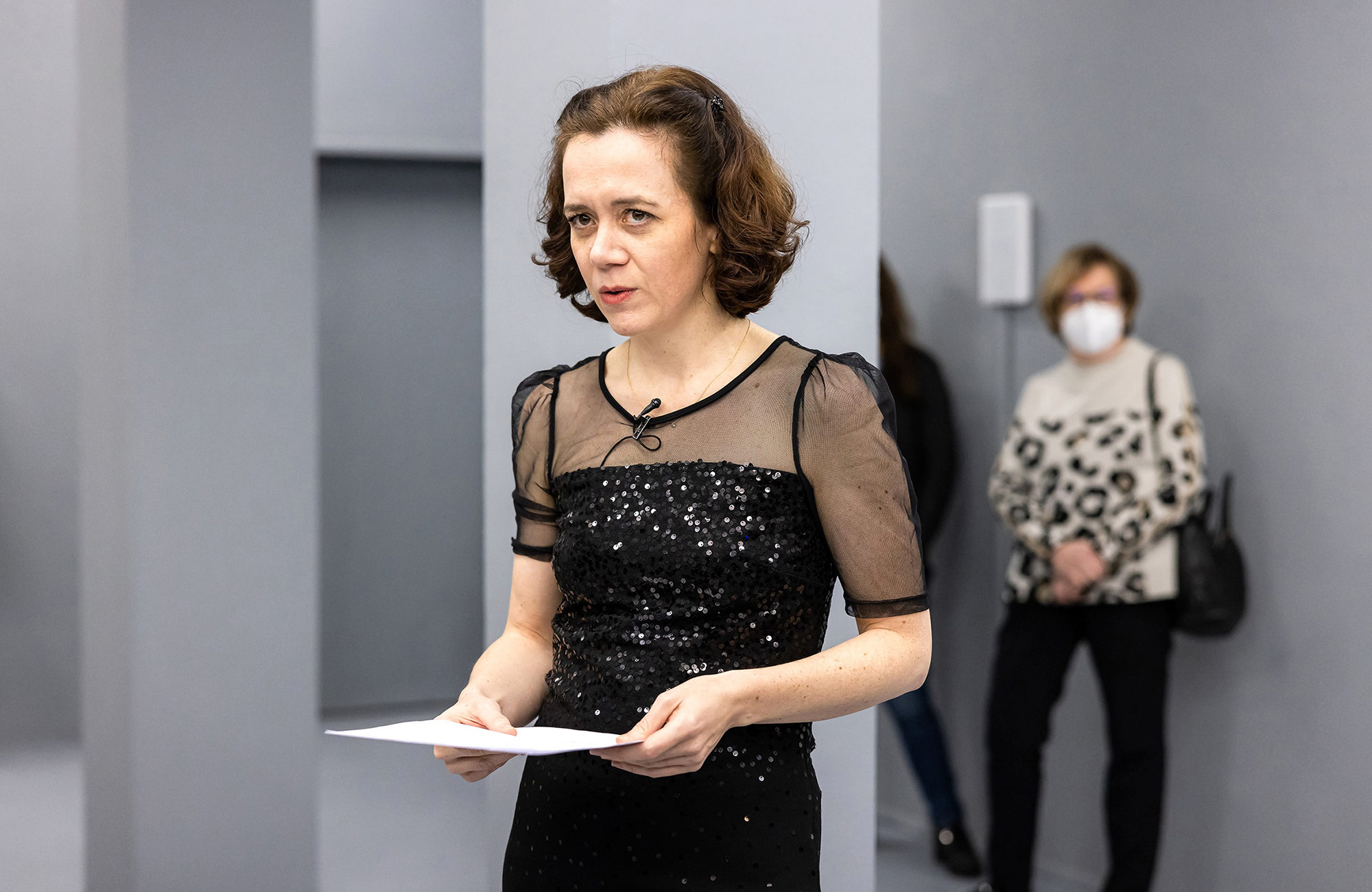
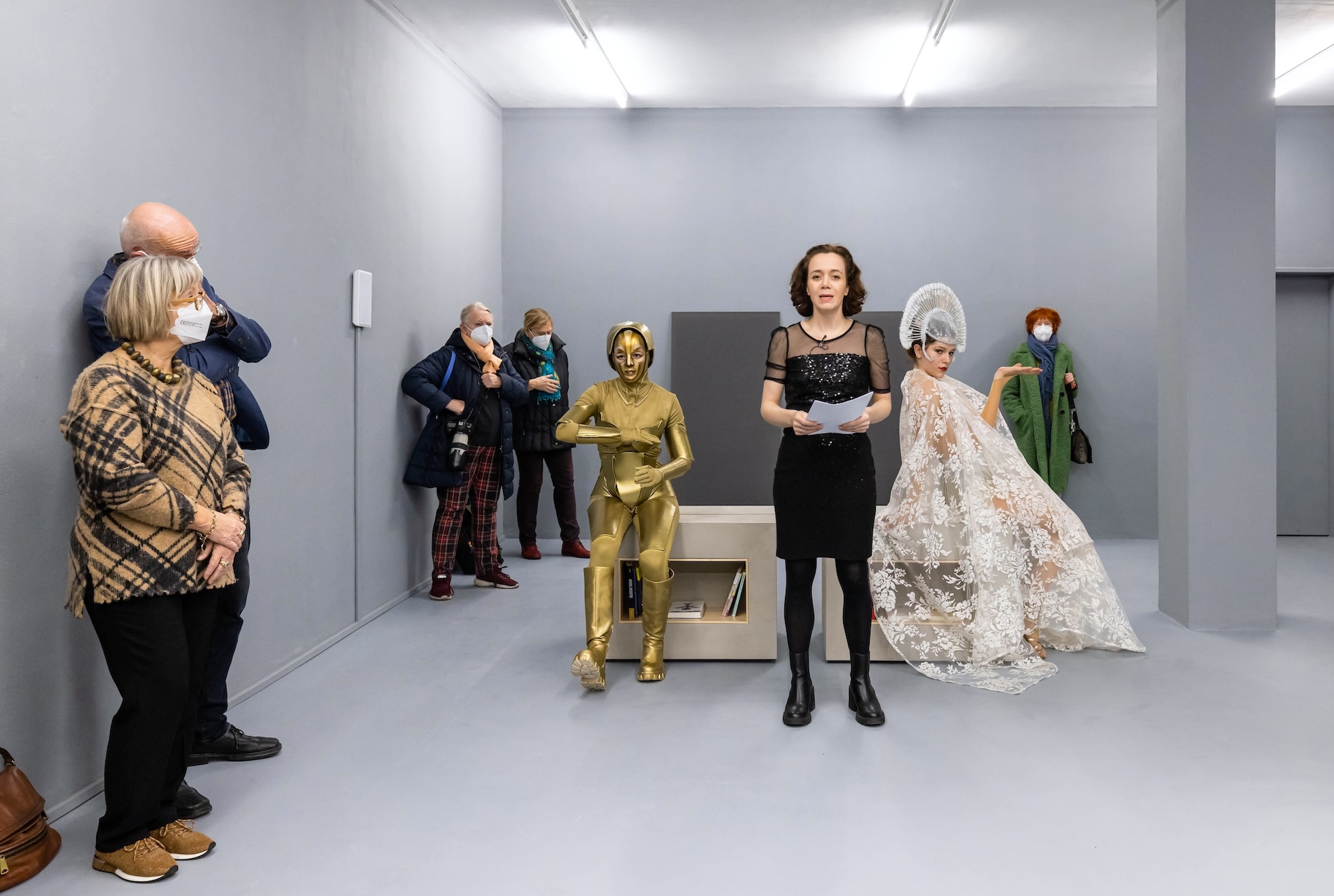
A key moment of activation takes place on January 15, 2022, at 7 pm, when Nadja Verena Marcin stages a live performance inside the exhibition space. This performance draws on the cumulative conversations and exchanges visitors have had with the bot during the exhibition, weaving them into a theatrical, embodied reflection on the representation of female voices in intelligent systems.
“#SOPHYGRAY” is a spatial installation with an audio bot and performance which subverts stereotypes embedded in humanized AI technologies such as chatbots and robots, revealing, and making their limitations accessible.
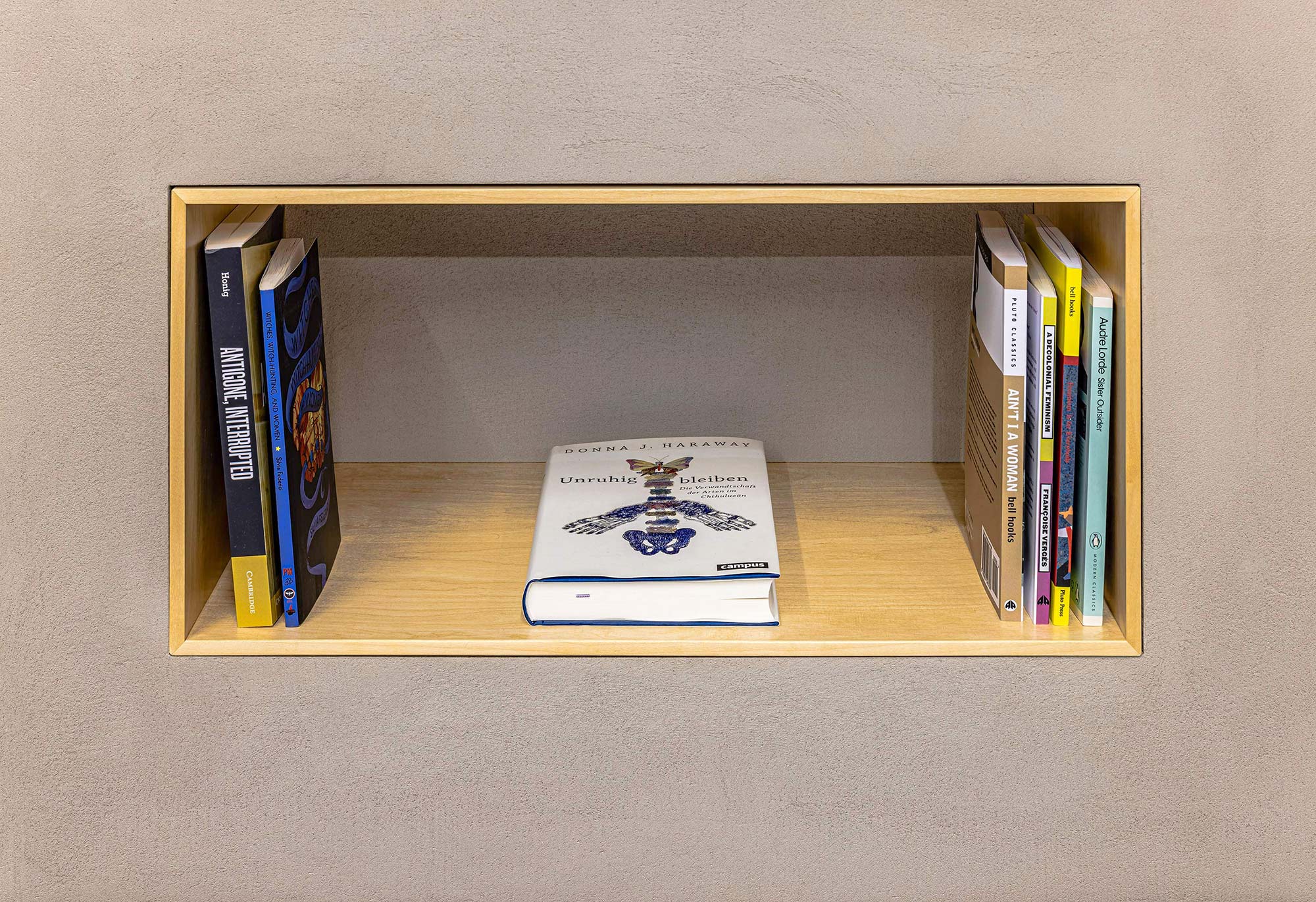
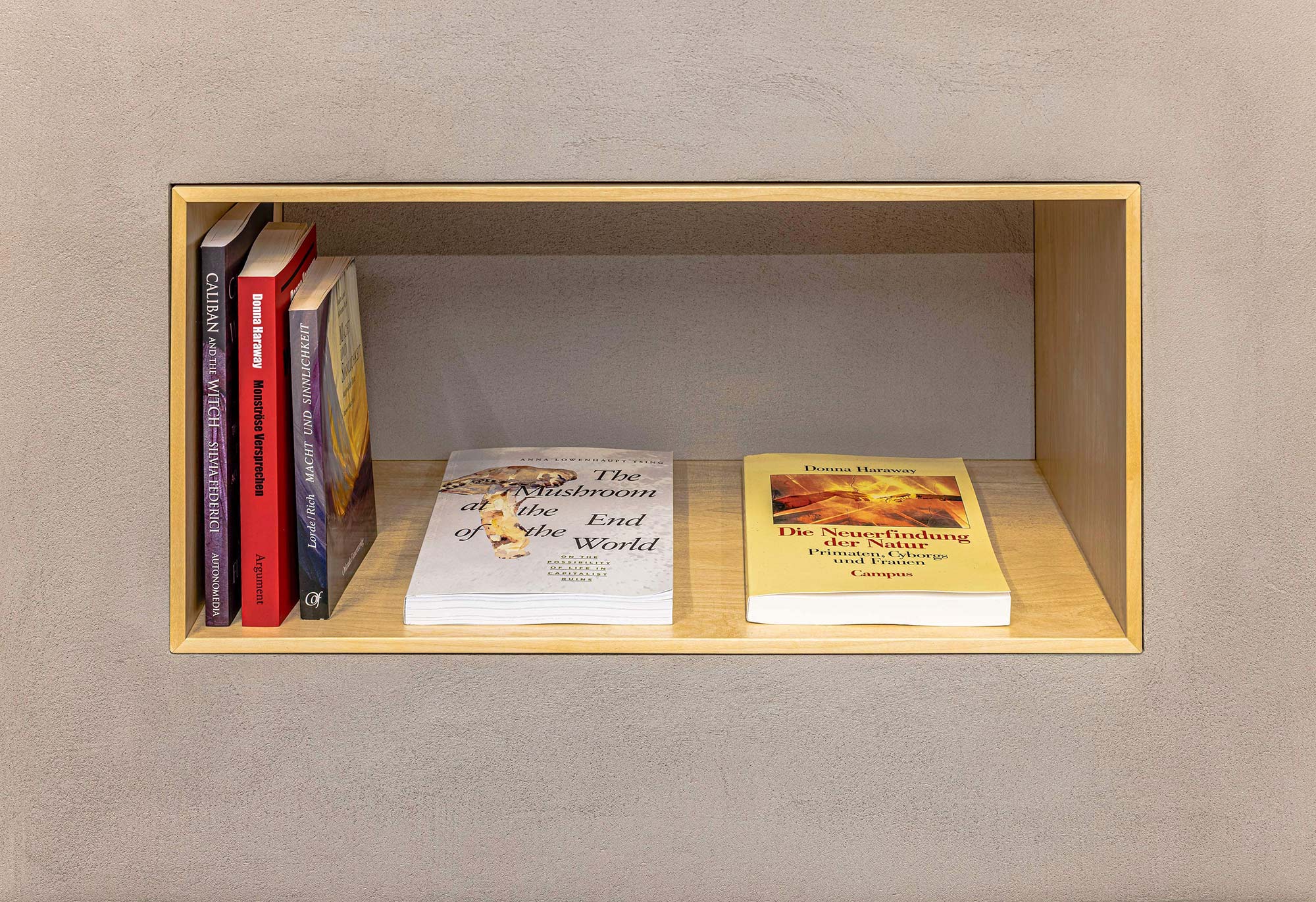
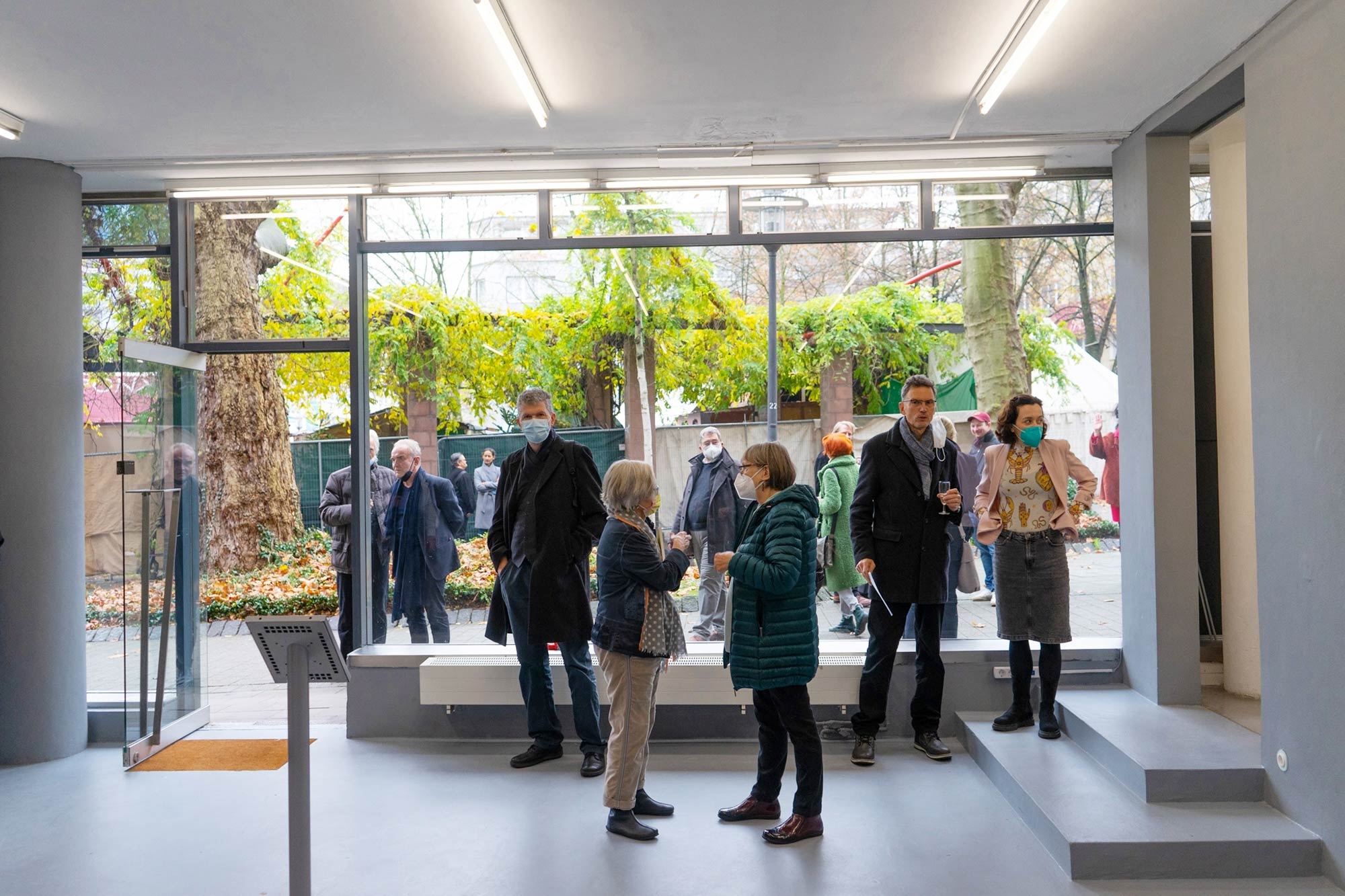
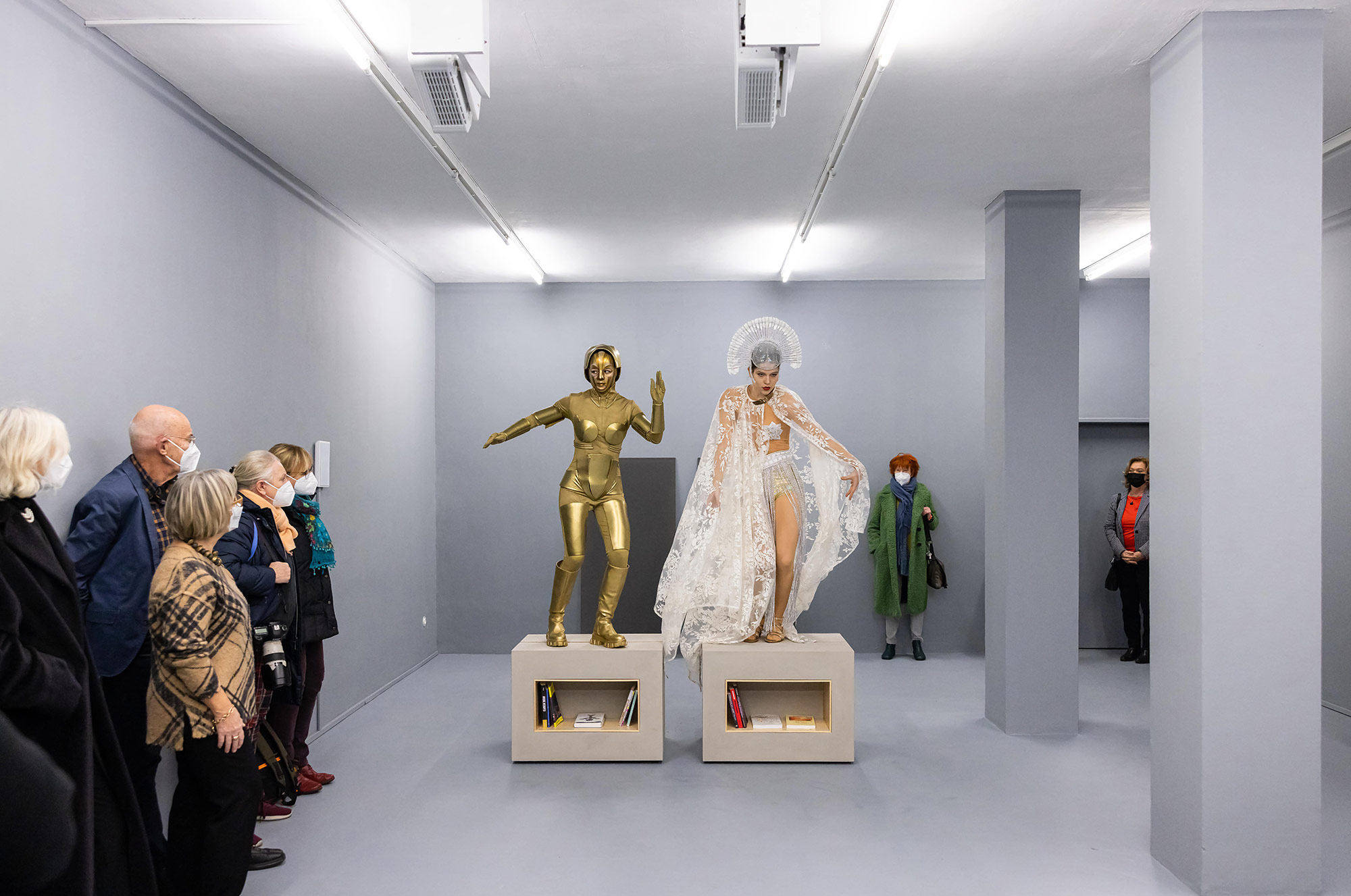
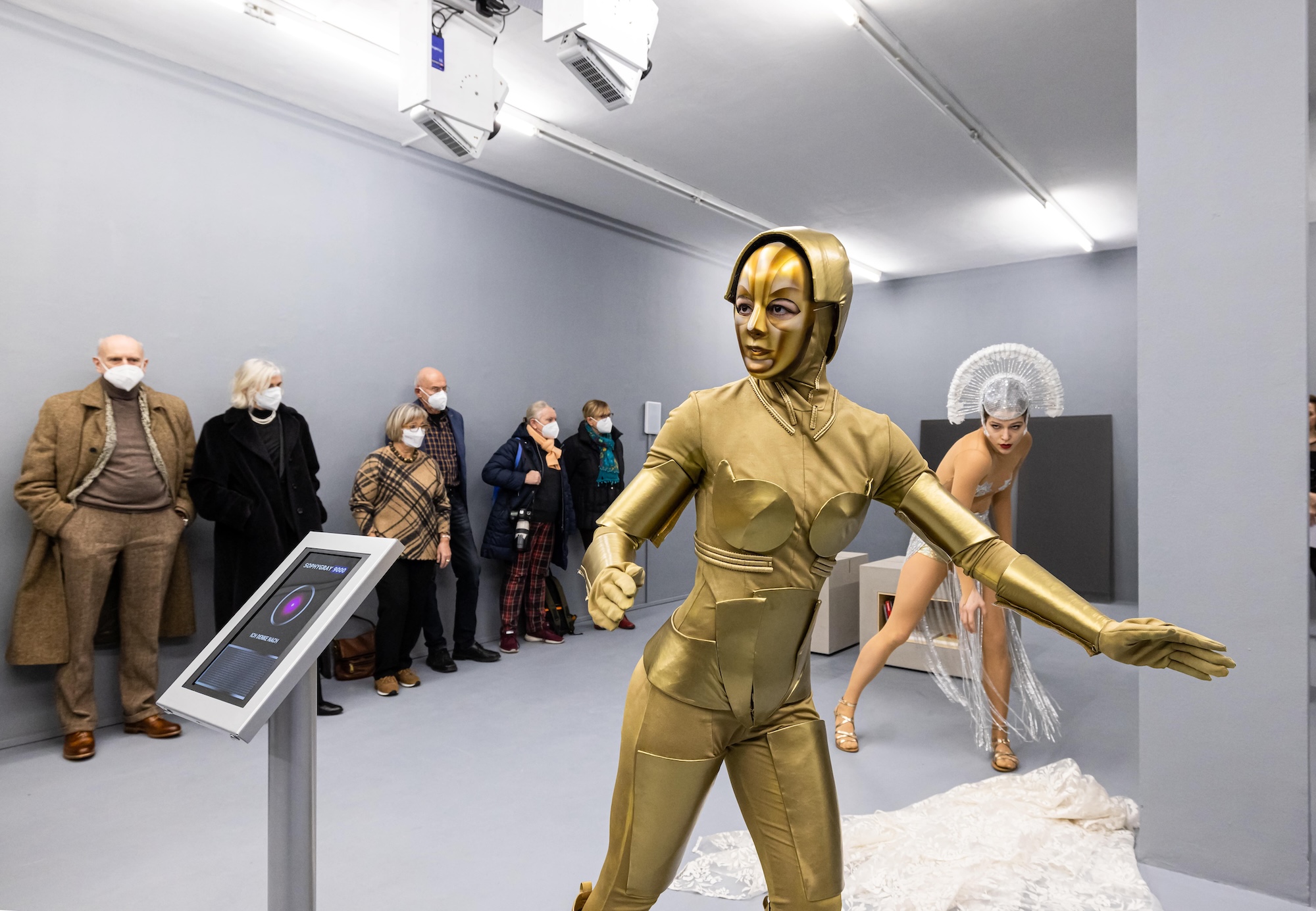
Inspired by Fritz Lang’s "Metropolis", reenactment videos of the fembot, Machineman, and dancer, Whore of Babylon, are projected vertically, greeting the audience when entering a gray space equipped with a tablet, wall speakers, and mini-libraries.
Via the tablet’s pink dot visitors are invited to converse with #SOPHYGRAY 9000 which answers in a stereotypically feminine manner enriched with philosophical comments from intersectional-feminist literature. By speaking intelligent, thought-provoking content, it breaks with the consumer expectation towards feminine audio-bots pleasing, submissive manner.
The audio bot is built via Google’s Dialogflow. During all exhibitions, the present content is enriched with the local histories in a progressive flux. For it, Marcin works together with an art historian with a feminist focus. To diversify the bot, crowdsourcing with worldwide participants is used for test sessions. Technical support is provided by Novatec and Jason Basset of the Max Planck Berlin.
As a special event, during each exhibition, Marcin presents a performance in which she holds a conversational lecture with two female dancers as fembot and dancer embodiments – confronting the audience with the juxtaposition of intellectual feminist values and female bodies in full dance flow, both expansive in space – a tribute to Audre Lordes’ “Uses of the Erotic”.
"#SOPHYGRAY" is a thought-provoking involvement of the viewer - visitors find themselves inside a think tank in which their dialogs create resonance and reality. In a combination of philosophical, humorous, and absurdist language, the work draws attention to clichés and patterns of consumer applications and stereotyping of language, gender, habitus, and culture.
Type of the project
Installation
Year the project was created
2022
Credits
Concept & Realization: Nadja Verena Marcin
Audio-Bot: Novatec
Audio-Bot Writers: Sonja Borstner, Leon Meschede, Nadja Verena Marcin
Costume: le costume - Uljana Richter
Choreography: Lena Strützke
Videography: Adèle Perrin
Sculpture Production: BetonIDEE - Rainer Mucha
Exhibition Photography: Sebastian Drüen Art Fotografie
Exhibition Videography: Klaus Schwichtenberg
Consultancy: Jason Basset of the Max Planck Institute for Human Development, Berlin
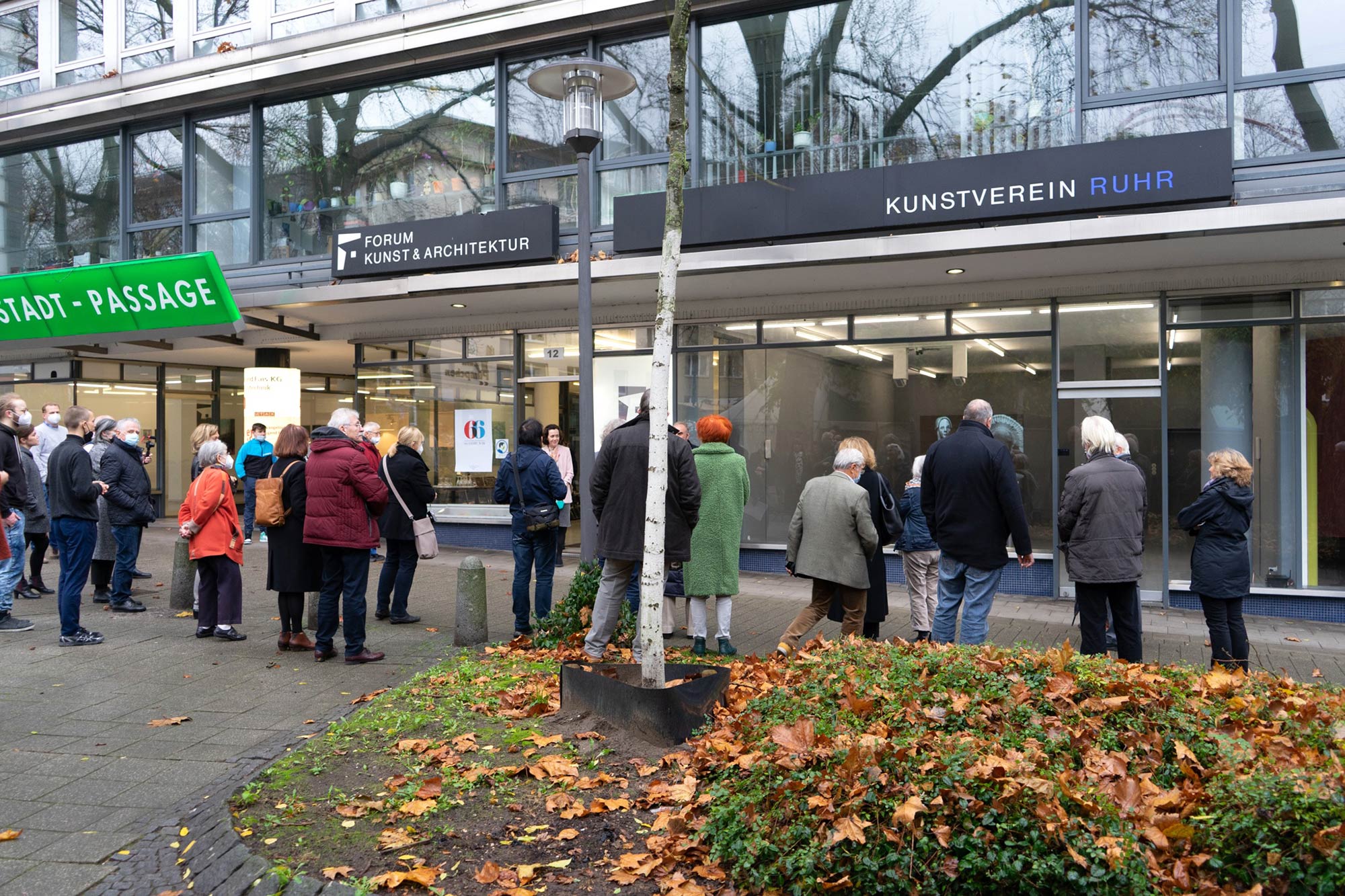
Exhibition: Kunstverein Ruhr, November 21 - February 13, 2022, curated by Peter Friese
(c) Nadja Verena Marcin
Support received from
The artwork is supported by the Ministry of Culture North Rhine-Westphalia and NEUSTART KULTUR by the German Federal Culture Commissioner, created in cooperation with postdoc Jason Basset of the Max Plank Institute Berlin and sponsored by Novatec (main sponsor), EPSON, Allbau, and Sparkasse Essen. Most recently, #SOPHYGRAY was awarded the Individual Artist Grant of Film, Media & New Technology by the New York Council on the Arts.
The exhibition is supported by the Ministry of Culture and Science of North Rhine-Westphalia and the NEUSTART Module C program of the BBK – Federal Association of Visual Artists, and was developed in cooperation with the Max Planck Institute, Berlin. Additional sponsors of the project include the Cultural Office of the City of Essen, Novatec, EPSON, Allbau, Gerriets, Repro Terminal, Aquasun, Sparkasse Essen, and the Berlin Neighborhood Center Süd-Ost.
Um dir ein optimales Erlebnis zu bieten, verwenden wir Technologien wie Cookies, um Geräteinformationen zu speichern und/oder darauf zuzugreifen. Wenn du diesen Technologien zustimmst, können wir Daten wie das Surfverhalten oder eindeutige IDs auf dieser Website verarbeiten. Wenn du deine Zustimmung nicht erteilst oder zurückziehst, können bestimmte Merkmale und Funktionen beeinträchtigt werden.
Funktional
Always active
Die technische Speicherung oder der Zugang ist unbedingt erforderlich für den rechtmäßigen Zweck, die Nutzung eines bestimmten Dienstes zu ermöglichen, der vom Teilnehmer oder Nutzer ausdrücklich gewünscht wird, oder für den alleinigen Zweck, die Übertragung einer Nachricht über ein elektronisches Kommunikationsnetz durchzuführen.
Vorlieben
Die technische Speicherung oder der Zugriff ist für den rechtmäßigen Zweck der Speicherung von Präferenzen erforderlich, die nicht vom Abonnenten oder Benutzer angefordert wurden.
Statistiken
Die technische Speicherung oder der Zugriff, der ausschließlich zu statistischen Zwecken erfolgt.Die technische Speicherung oder der Zugriff, der ausschließlich zu anonymen statistischen Zwecken verwendet wird. Ohne eine Vorladung, die freiwillige Zustimmung deines Internetdienstanbieters oder zusätzliche Aufzeichnungen von Dritten können die zu diesem Zweck gespeicherten oder abgerufenen Informationen allein in der Regel nicht dazu verwendet werden, dich zu identifizieren.
Marketing
Die technische Speicherung oder der Zugriff ist erforderlich, um Nutzerprofile zu erstellen, um Werbung zu versenden oder um den Nutzer auf einer Website oder über mehrere Websites hinweg zu ähnlichen Marketingzwecken zu verfolgen.